


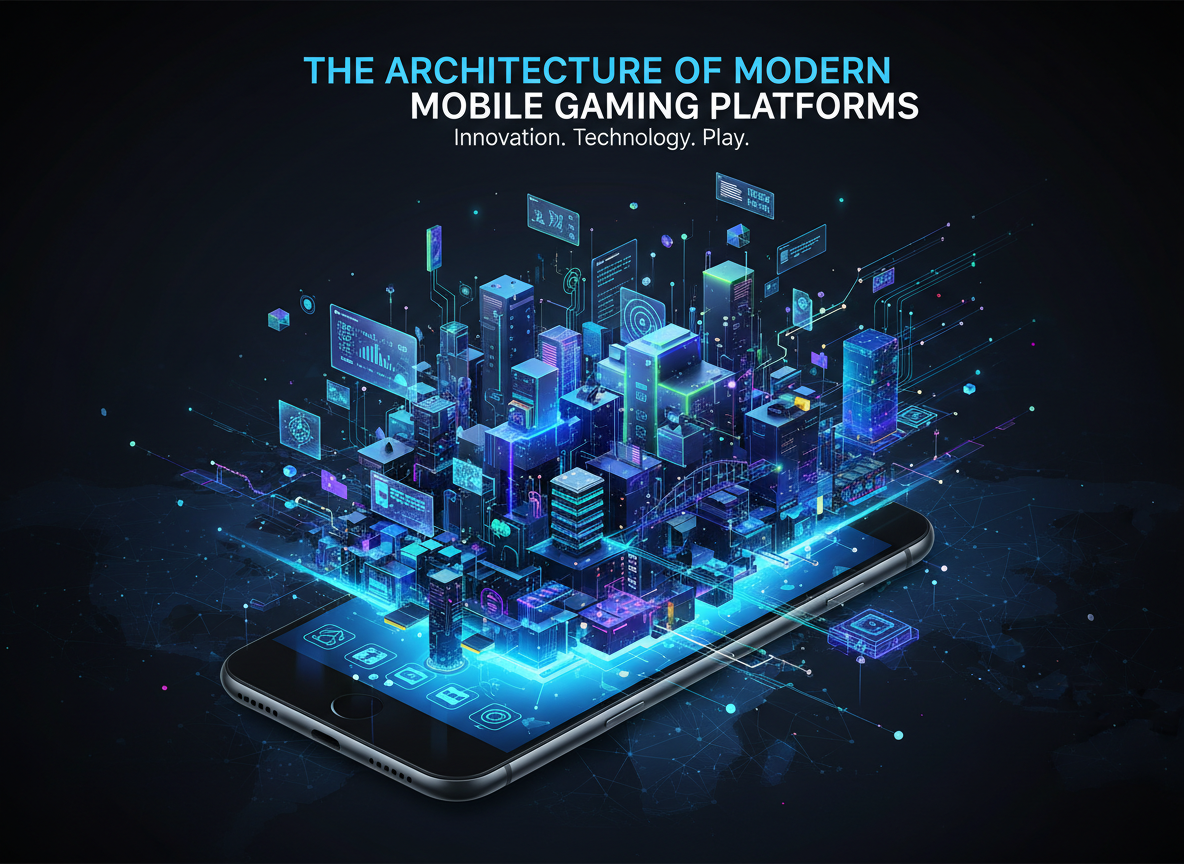
The shift from desktop software to mobile applications fundamentally redefined digital entertainment. Developers now face the unique challenge of packing massive computing power and high-definition graphics into pocket-sized screens. Mobile gaming platforms must deliver flawless performance, regardless of the user’s hardware or network connection.
This article breaks down the technological architecture behind successful mobile gaming platforms. We will explore the core mechanics of user interface design, the critical importance of backend security, and the mathematical models that drive continuous player engagement. Whether you develop gaming software or manage a digital entertainment platform, these insights will help you understand the infrastructure required to scale in a competitive market.
The Mobile-First Revolution in Digital Entertainment
Just a few years ago, developers built games for desktop computers and ported scaled-down versions to mobile devices. That approach no longer works. Modern platform architects employ a mobile-first strategy, designing the core experience specifically for touchscreens and variable network conditions.
This shift relies heavily on HTML5 technology. By utilizing HTML5, developers create games that run directly within mobile web browsers without requiring dedicated app downloads. This cross-compatibility ensures that users experience the same visual fidelity and smooth animations whether they use an iOS tablet or an Android smartphone.
Furthermore, mobile-first design requires a deep understanding of hardware limitations. Developers must optimize asset delivery to prevent battery drain and excessive data consumption. Clever compression algorithms allow platforms to stream high-quality audio and visual elements seamlessly, keeping the application lightweight and responsive.
Core Mechanics of High-Retention Games
Acquiring new users costs significantly more than retaining existing ones. Therefore, platform operators focus intently on the mechanics that keep players engaged over long periods. This requires a delicate balance between visual appeal and mathematical fairness.
Visual Fidelity and User Interface Design
The user interface (UI) serves as the bridge between the complex backend code and the player. Exceptional UI design removes all friction from the gaming experience. Menus must remain intuitive, and interactive buttons need to accommodate various screen sizes without feeling cluttered.
Game studios invest heavily in advanced rendering engines to produce stunning 3D graphics and fluid animations. However, these visuals must never compromise performance. A beautifully designed game will still fail if it stutters or crashes during crucial moments. Developers constantly run A/B tests on their interfaces to identify drop-off points and refine the user journey.
Mathematical Models and Random Number Generators
Beneath the flashing lights and crisp graphics, complex mathematical algorithms dictate the flow of the game. Digital platforms rely on Random Number Generators (RNG) to ensure absolute unpredictability. The RNG software generates millions of number sequences per second, determining the exact outcome the moment a player interacts with the game.
This technology forms the foundation of trust between the player and the platform. Independent testing agencies audit these algorithms rigorously. They run billions of simulated rounds to verify that the software behaves exactly as advertised, ensuring statistical fairness and protecting the integrity of the platform.
Exploring the Anatomy of a Premium Digital Experience
Creating a standout title requires more than just functional code. It demands a cohesive narrative, engaging audio-visual feedback loops, and dynamic pacing. Developers map out the psychological journey of the player, anticipating moments of excitement and periods of calm.
For instance, modern game design often incorporates multi-layered progression systems. Players unlock new features, discover hidden bonus rounds, or earn virtual achievements as they navigate the software. These elements transform a static game into an evolving digital journey. Leading developers ensure that every feature within a pg slot functions flawlessly across all operating systems, maintaining total immersion.
Audio design also plays a massive role in this premium experience. The synchronization of sound effects with on-screen actions provides critical subconscious feedback to the user. High-quality soundscapes elevate the perceived value of the game, keeping the player focused and entertained for longer sessions.
Security Protocols Protecting Digital Ecosystems
Digital gaming platforms process an immense volume of micro-transactions and handle sensitive user data daily. Consequently, robust cybersecurity infrastructure is entirely non-negotiable. A single data breach can permanently destroy a platform’s reputation and lead to severe regulatory fines.
Encryption and Data Transmission
Platform operators implement military-grade Transport Layer Security (TLS) encryption across their entire network. This protocol scrambles all data transmitted between the user’s mobile device and the central servers. Even if a malicious actor intercepts the data packet, they cannot decipher the personal or financial information hidden within.
Additionally, secure platforms utilize tokenization for financial transactions. Instead of storing actual credit card numbers on their servers, the system generates a unique digital token for each transaction. This drastically reduces the attack surface for hackers, ensuring that user financial data remains secure at all times.
Identity Verification and Compliance
Operating a digital entertainment platform requires strict adherence to international regulatory frameworks. Platforms must implement comprehensive Know Your Customer (KYC) protocols during the onboarding process. Users submit government-issued identification to verify their age and geographic location.
These protocols prevent underage access and protect the platform from being used for financial crimes. Automated identity verification tools now use artificial intelligence to scan documents and match facial biometrics in seconds. This allows platforms to remain fully compliant with the law without introducing unnecessary friction into the registration process.
The Role of Cloud Computing and Edge Networks
Handling thousands of concurrent users requires a highly elastic backend infrastructure. Traditional localized servers simply cannot handle the traffic spikes associated with major game launches or weekend peak hours.
Cloud computing provides the necessary scalability. Operators can provision additional server space dynamically, adjusting their computing power in real-time based on current demand. This elasticity prevents the platform from crashing when user traffic suddenly triples.
To combat latency, platforms deploy Content Delivery Networks (CDNs) and edge computing solutions. A CDN stores cached versions of the game’s static assets on servers located physically closer to the user. When players interact with a premium pg slot, they expect zero latency and immediate feedback. Edge computing processes data at the periphery of the network, drastically reducing the time it takes for a command to travel from the smartphone to the server and back again.
Data Analytics and Personalized Experiences
Modern gaming platforms generate mountains of behavioral data every single second. Operators use sophisticated data analytics tools to process this information and extract actionable insights. Understanding how users interact with the software allows developers to make informed, data-driven decisions.
Machine learning algorithms track which games a user prefers, what times of day they usually log in, and how long their average session lasts. The platform then uses this data to customize the user lobby dynamically. Instead of presenting a generic list of titles, the system highlights games and promotions tailored specifically to that individual’s tastes.
This level of personalization significantly boosts user retention rates. When players feel that the platform understands their preferences, they are far less likely to migrate to a competitor. Data analytics also help developers identify points of friction within specific games, allowing them to release targeted patches that improve the overall experience.
The Future of Mobile Gaming Platforms
The technological landscape continues to evolve at a breakneck pace. The widespread rollout of 5G networks will completely eliminate bandwidth constraints for mobile users. This leap forward will allow developers to stream incredibly dense, high-fidelity games directly to mobile devices without relying on local hardware processing.
Cloud gaming services are already demonstrating the potential of this technology. By rendering the game entirely on massive remote server farms and streaming the video feed to the user’s screen, platforms can deliver console-quality graphics to entry-level smartphones.
Furthermore, we will see deeper integration of artificial intelligence within game mechanics. AI will power dynamic difficulty adjustments, ensuring that games remain challenging but never frustrating. Smart NPCs (non-player characters) will react organically to user behavior, creating infinitely replayable scenarios that adapt to individual play styles.
Conclusion
Building a successful mobile gaming platform requires a masterful blend of creative design and rigorous backend engineering. From the responsive HTML5 interfaces that welcome the user, to the complex RNG algorithms that ensure fairness, every component must operate in perfect harmony.
As an operator or developer, prioritizing scalable cloud infrastructure and military-grade security protocols will protect your business as it grows. Focus heavily on frictionless user experiences and leverage data analytics to personalize the journey for every individual player. By staying ahead of technological trends like edge computing and AI integration, you can build a resilient platform that captures attention and retains loyal users for years to come.
