


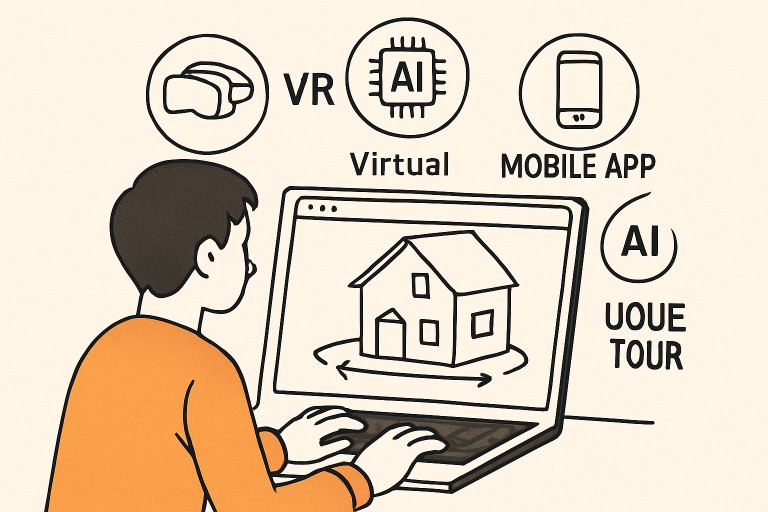
In recent years, technological advancements have significantly reshaped the home-buying process, making it more efficient, transparent, and user-friendly. From virtual tours to AI-driven insights, these innovations are revolutionizing how buyers search for and purchase homes. For those seeking expert guidance in this evolving landscape, partnering with a knowledgeable real estate agent is invaluable. For instance, a Lake Norman NC real estate agent Southern Charm Realty & Retreats offers comprehensive services to navigate the modern market. With over 20 years of experience and more than $250 million in total sold properties, Southern Charm Realty & Retreats specializes in the Lake Norman area, providing clients with local expertise and personalized service. Their deep understanding of the market ensures that buyers and sellers receive informed, tailored advice.
Virtual and Augmented Reality: Immersive Property Exploration
Virtual reality (VR) and augmented reality (AR) have revolutionized property viewings by enabling buyers to tour homes from the comfort of their own space. High-resolution, interactive walkthroughs provide a realistic sense of a property’s layout and features, reducing the need for multiple in-person visits. This is particularly beneficial for long-distance buyers or those with tight schedules. Additionally, AR allows users to visualize changes to the property, such as different wall colors or furniture layouts, making it easier to see a house as a future home.
Beyond simple walkthroughs, some real estate agencies now employ immersive 3D staging, letting buyers virtually move through homes with the latest furniture trends or even simulate upcoming renovation plans. This degree of detail helps buyers make informed decisions and brings an emotional connection that’s often missing in static images or blueprints. Increasingly, these technologies are being bundled with mobile applications so clients can tour properties at any time, whether during a lunch break or from thousands of miles away.
Artificial Intelligence: Personalized Property Recommendations
Artificial intelligence (AI) is streamlining the home search process by analyzing buyer preferences and delivering tailored property suggestions. Machine learning algorithms consider factors like past searches, saved listings, and user interactions to refine recommendations. Natural language processing (NLP) enables AI to understand nuanced buyer preferences, even when not explicitly stated, enhancing the efficiency and satisfaction of the home-buying experience.
AI chatbot assistants are also becoming more sophisticated, offering quick responses to questions, scheduling viewings, and providing instant mortgage calculations. As AI continues to advance, buyers will benefit from even more personalized experiences, such as virtual assistants that proactively notify users about new properties, suggest negotiation strategies, and forecast changes in neighborhood demographics or future values.
Blockchain Technology: Secure and Efficient Transactions
Blockchain technology is beginning to penetrate the real estate transaction process, promising to make it more secure and efficient. By enabling direct transactions between buyers and sellers without intermediaries, blockchain can reduce fraud and speed up the sale process. Smart contracts automatically execute transactions when conditions are met, eliminating the paperwork and bureaucracy that often slow down real estate deals.
Title transfers and escrow processes can be conducted seamlessly on blockchain platforms, providing an immutable, transparent record of ownership. This not only increases trust among parties but also reduces administrative costs, making homeownership more accessible. In the near future, blockchain could further decentralize real estate marketplaces, empowering individuals to transact globally with confidence and safety.
Big Data Analytics: Predictive Market Insights
Big data analytics plays a pivotal role in the real estate market by enabling a more personalized experience for buyers and sellers. Algorithms can predict market trends, helping sellers decide when to list their homes and suggest properties to buyers based on their preferences and previous searches. This level of personalization streamlines the search process, potentially reducing the time and stress involved in finding the perfect home.
Additionally, market analysis tools harness vast datasets to assess neighborhood growth, school rankings, infrastructure plans, and comparative pricing. These insights empower buyers to make data-driven decisions, identify emerging regions, and anticipate market shifts before they occur. As property markets become more competitive, access to such analytics can give both buyers and sellers a distinct advantage.
Mobile Applications and Online Platforms: Seamless Communication
Mobile applications and online platforms have transformed communication between buyers, sellers, and real estate agents. These tools offer real-time notifications, schedule management, and instant messaging, ensuring that all parties stay informed and coordinated throughout the buying process. Features like self-guided tours and interactive design platforms empower buyers to take control of their home search journey.
Furthermore, e-signature tools and centralized document portals have greatly reduced paperwork bottlenecks. These apps allow clients to review contracts, upload necessary documentation, and sign forms digitally from anywhere in the world. Combined with secure messaging and notifications, they bring unprecedented convenience to all stages of the transaction, minimizing delays and simplifying complex negotiations.
Expanding Access and Future Trends
Technology is also democratizing the home-buying process, making it more accessible to a broader range of people. Online calculators, budget planners, and educational resources guide first-time buyers through complicated steps and empower them to make decisions with confidence. Social media and digital marketing further extend the reach of listings, connecting properties to previously untapped markets and generating interest across demographic boundaries.
Looking ahead, advancements such as Internet of Things (IoT) integration in smart homes and advanced home automation previews are poised to further enhance the buyer experience. Imagine touring a property where you can interact with smart thermostats, security systems, and lighting controls, experiencing not just the physical, but also the digital aspects of contemporary home life. As technology continues to evolve, the possibilities for refining and enhancing the home-buying journey are virtually limitless.
Final Thoughts
The integration of technology into the home-buying process has made it more accessible, efficient, and personalized. As innovations continue to emerge, buyers can expect an increasingly streamlined experience that caters to their individual needs and preferences. Embracing these technological advancements not only simplifies the journey to homeownership but also opens up new possibilities for finding the perfect home.
