


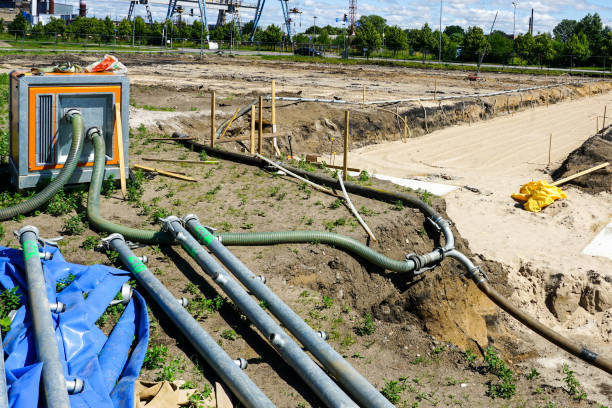
Modern construction sites are increasingly opting for advanced, non-invasive methods of soil removal to protect underground infrastructure and improve job site safety. One such method is hydro digging, a technique that uses high-pressure water to dislodge earth while simultaneously vacuuming debris into a containment tank. This method, recognized for its precision and minimal risk, has quickly become the gold standard for projects requiring safe excavation around existing utilities.
Unlike traditional mechanical digging, hydro excavation offers contractors unparalleled control, reducing the likelihood of accidental utility strikes and costly project delays. The technology is reshaping best practices in construction, environmental cleanup, and renewable energy sectors—making sites safer and more environmentally responsible while increasing operational efficiency.
Advancements in Hydro Excavation Technology
Recent years have seen significant innovation in hydro excavation equipment and methodology. Enhanced water jet systems now enable precise control over pressure and flow, allowing operators to tailor excavation power to varying soil types and site-specific requirements. Revamped vacuum systems are designed to cope with varying ground conditions, ranging from dry sand to frozen clay, thereby broadening the scope of projects where hydro excavation is not only possible but also preferred.
Many modern hydro excavation trucks now feature robust filtration and debris management systems, ensuring not only efficiency in soil removal but also compliance with stricter environmental standards set by regulators. This allows for faster, cleaner, and more sustainable project site management.
Integration of Automation and Smart Systems
The next leap in hydro excavation comes from the integration of automation and smart technologies. Sophisticated controls, GPS-guided systems, and real-time data monitoring enable operators to excavate with millimeter-level accuracy. Automation reduces the need for manual labor in hazardous environments, minimizing the likelihood of on-the-job injuries and improving overall site safety.
These smart systems also enable predictive maintenance of equipment and optimized excavation paths, reducing downtime and maximizing resource efficiency. As artificial intelligence and machine learning gain traction, fully autonomous hydro excavation units are on the horizon, promising to make sitework even safer and more cost-effective.
Applications in Utility Maintenance and Construction
Hydro excavation is indispensable for projects near dense utility corridors. It is routinely used to safely expose underground utilities, including water mains, natural gas lines, fiber optic cables, and electrical conduits. This non-destructive method significantly reduces the risk associated with traditional excavations, where accidental strikes can result in service disruptions, fines, or serious injuries.
In urban developments and roadworks, hydro excavation is favored for its low environmental impact and reduced surface disturbance. By mitigating the risk of costly utility damage and enabling precise navigation in congested underground environments, hydro excavation directly contributes to the speed and efficiency of infrastructure maintenance and new installations.
Environmental Cleanup and Spill Response
Hydro excavation has proven essential in environmental cleanup and response to spills. Specialized hydrovac trucks equipped with multi-stage filtration effectively capture contaminated materials during site remediation or chemical spill containment. The targeted, vacuum-assisted removal prevents migration of hazardous substances, safeguarding both surface and groundwater resources and limiting spread into sensitive environments.
This targeted approach not only protects natural habitats but also safeguards workers from unnecessary exposure to hazardous pollutants. In fact, hydro excavation’s closed-loop systems help meet and exceed the strict environmental guidelines applied to spill response and soil remediation operations.
Infrastructure and Renewable Energy Projects
Large infrastructure and renewable energy projects, such as the installation of wind turbines or subterranean power distribution, are increasingly reliant on hydro excavation. The ability to work efficiently in unstable, wet, or frozen ground—without damaging existing infrastructure or harming local ecosystems—makes hydro excavation uniquely qualified for these high-stakes projects.
Whether excavating for foundation pilings, trenching for underground cabling, or preparing sites for solar arrays, this method guarantees the safety and precision required for the future of green energy and public works expansion.
Future Trends in Hydro Excavation
The hydro excavation industry is near a transformation driven by sustainability, automation, and expanded applications. New equipment focuses on reducing emissions, noise, boosting operator comfort, and being lightweight yet powerful for remote sites. AI diagnostics and workflow planning will further improve accuracy, reduce errors, and enable safer, autonomous operations across environments. As construction demands grow for safety, environmental care, and efficiency, hydro excavation remains the preferred modern method of earthmoving. Technological advances will extend their benefits to new markets, solidifying their role in 21st-century infrastructure.
