


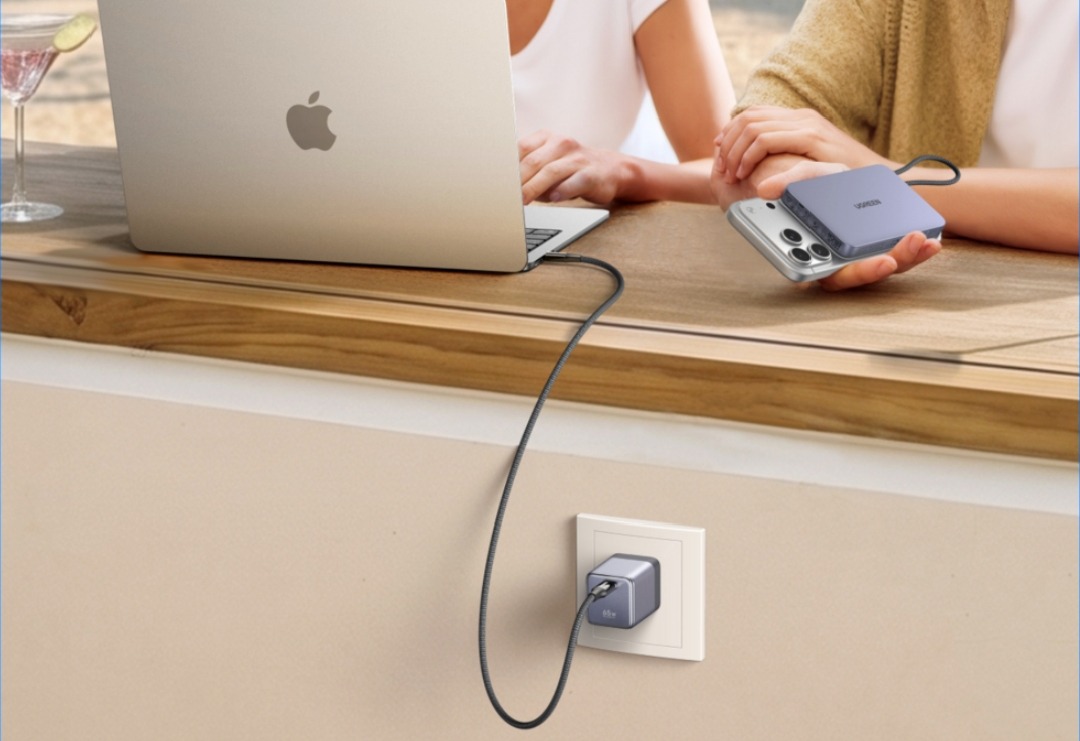
Not every day needs a laptop bag. Some days are lighter: a commute with a crossbody bag, a quick trip into town, a coffee meeting, a few errands, an after-work plan, a train journey across the city, or a weekend afternoon where you only want your phone, keys, earbuds and card holder. The problem is that modern life still expects your phone to do everything.
It holds your train ticket, payment app, maps, messages, calendar, camera, banking notifications, delivery codes, authentication prompts and entertainment. Even when you leave the house with less, your phone does not get a lighter workload. This is why a small-bag charging method is useful.
The idea is simple: instead of carrying a full tech pouch every day, build a compact setup that fits smaller bags and pockets. A slim power bank, a short cable, a mini charger and the right usb c charger at home or work can keep battery anxiety under control without adding bulk.
1. Think in pockets, not backpacks
Many charging routines are designed around a backpack or laptop sleeve. That is fine for office days, but not every daily trip works like that. UK commuters and everyday users often move between different carry styles: coat pocket in the morning, tote bag for errands, handbag for the evening, gym bag after work, or no bag at all for a short outing.
The first rule of the small-bag method is to choose accessories that fit the smallest version of your day. If a power bank only works when you carry a large bag, you will leave it behind on the days you need it most.
A slim power bank is useful because it fits into these smaller spaces. It can slide into a jacket pocket, small crossbody bag, side pocket or compact pouch. That makes it more likely to be with you when your battery starts dropping during a train delay, long queue or unexpected evening plan.
2. Build a three-item charging kit
A small-bag charging kit should not be complicated. For most everyday outings, three items are enough: a slim power bank, a reliable short cable and a compact wall charger for planned charging points.
The slim power bank covers movement. It helps when you are on the bus, walking between appointments, waiting on a platform or sitting in a café without an available socket. The short cable keeps the setup tidy. The mini charger or usb c charger belongs at a fixed location, such as home, office, locker, desk drawer or travel pouch.
This split is important. You do not need to carry everything all the time. You need backup power for moments without sockets and fixed charging tools for moments when sockets are available.
3. Keep the power bank slim enough to carry daily
The biggest mistake with everyday charging is choosing an accessory that is powerful but inconvenient. A large power bank may be useful for long trips, but if it feels too heavy for daily life, it becomes an emergency item rather than a habit.
A slim power bank solves a different problem. It is not about replacing every socket. It is about giving you enough confidence to use your phone normally throughout the day. You should be able to use maps, music, mobile tickets and messages without rationing battery from lunchtime onwards.
The ugreen magflow air fits this daily-carry logic. It is designed as a slim 10000mAh magnetic power bank with Qi2 15W wireless charging, a built-in USB-C cable and up to 30W wired output. For small-bag users, the built-in cable is especially useful because it reduces the number of loose items you need to remember.
4. Use “top-up windows” instead of full charges
Small-bag charging is not about keeping your phone at 100% all day. That mindset creates pressure. A better habit is to use short top-up windows.
A top-up window might be 10 minutes on the train, 15 minutes during lunch, a few minutes while waiting for a friend, or the time it takes to drink a coffee. These small boosts can be enough to move your phone out of the low-battery danger zone.
A slim power bank makes top-up windows easier because you do not need to look for a wall socket. If your phone supports magnetic wireless charging, a magnetic power bank can be especially convenient during seated moments. If you want a faster or more secure connection, the USB-C cable gives you another option.
The key is to charge before the situation becomes stressful. Do not wait until your phone reaches 4% on the way home.
5. Put your mini charger where it earns its place
A mini charger is most useful when it lives in a predictable place. It does not always need to travel with you. For example, keep one near the front door, in a work drawer, by your bedside, in a gym locker pouch or inside a weekend bag.
This gives your charging routine a fixed base. Your slim power bank handles the moving parts of the day, while the mini charger resets your devices when you reach a stable location. If you work from different places, a small charger in your regular bag can also be useful, especially if you often stop at cafés, libraries or shared workspaces.
For users with more than one device, a usb c charger can be a better base than a basic phone charger. It can help recharge a phone, earbuds, power bank, tablet or compatible compact laptop depending on the setup. The trick is to use the smallest charger that still covers your real needs.
6. Choose the right cable strategy
Cables create clutter quickly. Small bags do not forgive clutter. One long cable, one spare cable and one old cable can turn a neat pouch into a knot.
A better approach is to choose one short everyday cable and keep it in the same place. If your power bank includes a built-in USB-C cable, that can simplify things even further. The ugreen magflow air is practical in this sense because it reduces the need to carry a separate cable for common USB-C charging situations.
Still, it is worth keeping one additional cable at home or work for backup. The goal is not to carry a cable collection. It is to make sure your daily kit works when needed.
7. Match charging to your phone habits
Battery anxiety often comes from underestimating how much the phone does during a light day. A person leaving without a laptop may actually use their phone more, not less. They check email on mobile, open maps more often, use mobile payments, join calls, take photos and manage transport apps.
If your day is phone-heavy, your slim power bank should be easy to reach. Do not bury it at the bottom of a bag. Place it in the pocket you use most. Charging should feel as natural as taking out your earbuds.
If your phone is used mainly for tickets and payments, you may not need frequent top-ups, but you still need a reserve. The point of the small-bag method is flexibility. You carry enough power for the unexpected without carrying too much hardware.
8. Make evening plans part of the routine
Many people plan battery around the workday but forget the evening. That is when battery anxiety often becomes worse. The commute home may turn into dinner, a delayed train, a gym session, a supermarket stop or a walk across town.
Before leaving your main daytime location, check your battery. If it is low, top it up for a few minutes. If you have a socket, use your mini charger or usb c charger. If you are already moving, use your slim power bank.
This one habit protects the most unpredictable part of the day. It also prevents the classic situation where your phone is almost empty just when you need maps, payment or the last train information.
9. Reduce battery drain before it starts
A compact charging kit works best when paired with simple battery-saving habits. Download playlists or podcasts before leaving home. Save tickets and key documents offline. Lower screen brightness when you do not need full brightness. Turn off unnecessary location access for apps you are not using. Use low power mode earlier on long days, not only at the very end.
These habits make your power bank last longer. They also make your phone feel more reliable, especially during commuting or busy days out.
A good charging routine is not only about adding energy. It is also about wasting less.
10. Reset the kit at night
The small-bag method only works if the kit is ready tomorrow. At night, place the power bank, cable and charger in one spot. Recharge the power bank if it has been used. Put the cable back in the same pocket or pouch. Keep your mini charger where it belongs.
This routine takes less than a minute, but it prevents morning panic. You do not need to search drawers, check random cables or wonder whether your backup battery is empty. The setup is simply ready to go.
UGREEN’s MagFlow Air concept fits neatly into this reset habit because it combines slim carry, wireless convenience and built-in cable practicality in one everyday accessory. It is the kind of product that makes sense when charging is treated as a routine, not a last-minute rescue.
Conclusion: Carry less, but carry smarter
Battery anxiety is not always caused by heavy phone use. Sometimes it comes from not having a simple plan. A small-bag charging method helps by matching your accessories to real daily movement.
A slim power bank gives you mobile backup without bulk. A mini charger supports planned charging moments. A usb c charger adds flexibility at home, work or shared spaces. Together, they create a lightweight system for commuters, everyday outings and phone-heavy days.
For UK users who want to leave home with less but still depend on their phone for tickets, payments, maps and messages, the lesson is clear: do not build your charging routine around the biggest bag you own. Build it around the smallest one you actually carry. That is how backup power becomes part of daily life instead of another thing to remember.
